
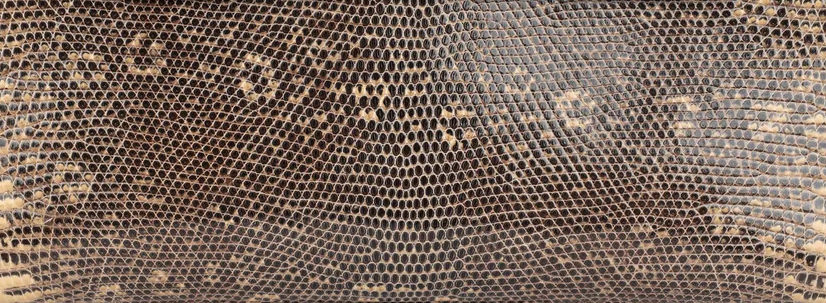
Introduction to Hermès Salvator Lizard Leather
What distinguishes this particular lizard leather from other exotic options is its unique combination of refined texture, exceptional color absorption capabilities, and the distinctive scale pattern that creates an almost hypnotic visual effect under different lighting conditions. Each piece of Salvator lizard skin tells its own story through natural variations in scale size and pattern distribution, ensuring that every Hermès creation crafted from this material becomes a truly unique work of art that cannot be replicated.
History and Heritage of Salvator Lizard in Luxury
The introduction of Hermès Salvator Lizard Leather into the maison’s collection represents a pivotal moment in the evolution of luxury leather goods, marking a period when exotic materials began to symbolize the ultimate expression of exclusivity and craftsmanship. The Varanus salvator, commonly known as the water monitor lizard, has been prized for centuries in Southeast Asian cultures for its remarkably durable and beautifully patterned skin, but it was Hermès who elevated this material to the heights of luxury fashion.
During the 1920s and 1930s, as international travel became more accessible to the wealthy elite, there was a growing fascination with exotic materials that could capture the essence of far-flung destinations. Hermès, always at the forefront of luxury innovation, recognized the potential of Salvator lizard skin to meet this demand while maintaining the house’s uncompromising standards of quality. The introduction of this leather coincided with the Art Deco movement, whose emphasis on geometric patterns and luxurious materials found perfect expression in the naturally occurring scale patterns of the Salvator lizard.
The sourcing and processing of Hermès Salvator Lizard Leather has evolved significantly over the decades, with modern practices emphasizing sustainability and ethical harvesting. Unlike some other Exotic Leather options, Salvator lizard populations are carefully managed through regulated farming operations that ensure the long-term viability of the species while meeting the demands of luxury production. This commitment to responsible sourcing has become increasingly important to contemporary collectors who seek not only beauty and exclusivity but also ethical accountability in their luxury purchases.
Throughout its history at Hermès, Salvator Lizard Leather has been reserved for the most exclusive creations, often appearing in limited edition releases and special orders that showcase the material’s exceptional qualities. The leather has adorned everything from the iconic Birkin and Kelly bags to small leather goods and watch straps, each piece demonstrating the versatility and enduring appeal of this remarkable material. Notable collectors and fashion icons have long prized Salvator lizard pieces for their ability to maintain their beauty over decades of use, developing a subtle patina that only enhances their character and value.
Comprehensive Characteristics of Hermès Salvator Lizard Leather
The distinctive characteristics of Hermès Salvator Lizard Leather set it apart from all other exotic materials in the luxury market, beginning with its unmistakable scale pattern that features a harmonious blend of larger rectangular scales transitioning to smaller, more circular scales. This natural gradation creates a visual rhythm that is both sophisticated and captivating, with each scale catching and reflecting light in subtly different ways to produce an almost three-dimensional effect that changes with the viewing angle.
The texture of Salvator lizard leather presents a fascinating contrast to other exotic options like Hermès Crocodile Leather, offering a smoother, more refined surface that feels almost silk-like to the touch while maintaining the structural integrity necessary for luxury handbag construction. The scales lie flat against the leather base, creating a surface that is both visually textured and practically smooth, making it less prone to catching on clothing or jewelry compared to raised-scale exotic leathers.
One of the most remarkable properties of Hermès Salvator Lizard Leather is its exceptional ability to absorb and display color with unprecedented vibrancy and depth. The natural protein structure of lizard skin allows dyes to penetrate deeply and evenly, resulting in colors that appear almost luminous, particularly in jewel tones like emerald green, sapphire blue, and ruby red. This chromatic intensity surpasses even that achieved with Hermès Niloticus Lizard Leather, making Salvator lizard the preferred choice for clients seeking the most vivid and lasting color expression.
The durability characteristics of this exotic leather deserve special attention, as they combine surprising resilience with undeniable delicacy. While the material is inherently strong and resistant to tearing, it requires more careful handling than robust options like Epsom or Clemence leather. The scales provide natural armor against minor abrasions, but the leather base beneath can be sensitive to moisture and extreme temperatures. This duality requires owners to be mindful of usage conditions while still being able to enjoy their pieces regularly with proper care.
Weight is another distinguishing factor of Hermès Salvator Lizard Leather, as it tends to be lighter than comparable exotic materials while maintaining structural integrity. This characteristic makes it particularly desirable for larger bag styles where weight can become a practical concern, allowing for the creation of statement pieces that don’t sacrifice comfort for visual impact. The flexibility of the leather also contributes to its appeal, as it can be shaped and molded during the crafting process to achieve precise forms while retaining its shape over time.
The aging process of Salvator lizard leather is particularly fascinating, as it develops a subtle sheen and suppleness over time without losing its distinctive scale definition. Unlike some leathers that can become dull or worn-looking with age, properly maintained Salvator lizard leather actually improves with time, developing a patina that enhances its natural beauty while maintaining the crisp definition of its scale pattern.
Manufacturing Excellence and Craftsmanship
The transformation of raw Salvator lizard skin into Hermès Salvator Lizard Leather represents one of the most complex and demanding processes in luxury leather production, requiring expertise that has been refined over generations of craftspeople. The journey begins with the careful selection of skins, where only specimens meeting Hermès’ exacting standards for scale uniformity, size, and condition are chosen for processing. This initial selection process eliminates approximately seventy percent of available skins, ensuring that only the finest examples proceed to the tanning stage.
The tanning process for Salvator lizard leather differs significantly from that used for mammalian leathers, requiring specialized techniques that preserve the delicate scale structure while achieving the suppleness necessary for luxury goods production. Hermès employs a proprietary combination of vegetable and mineral tanning methods that have been specifically developed for exotic skins, with each step carefully calibrated to maintain the natural beauty of the scales while ensuring long-term stability and durability. This process can take several months to complete, far longer than the tanning of conventional leathers.
Color application to Hermès Salvator Lizard Leather represents another level of artisanal expertise, as the dyeing process must account for the varying absorption rates of different areas of the skin. The larger dorsal scales absorb dye differently than the smaller ventral scales, requiring master colorists to adjust their techniques to achieve uniform color saturation while preserving the natural variation that gives the leather its character. This is particularly challenging when compared to more uniform materials like Hermès Varanus Niloticus Lizard Leather, which has a more consistent scale pattern.
The cutting and preparation of Salvator lizard leather for bag construction requires exceptional skill and planning, as the natural shape and scale pattern of the skin must be carefully oriented to maximize both aesthetic appeal and structural integrity. Master craftspeople spend years learning to read the unique characteristics of each skin, identifying the optimal placement for different bag components to ensure that the scale pattern flows naturally across seams and maintains symmetry where desired. This level of attention to detail distinguishes genuine Hermès craftsmanship from lesser imitations.
Quality control throughout the manufacturing process is extraordinarily rigorous, with multiple inspection points ensuring that every aspect of the leather meets Hermès standards. This includes testing for color fastness, flexibility, tensile strength, and resistance to environmental factors. Any piece that shows even minor imperfections is rejected, contributing to the rarity and value of finished products in Hermès Salvator Lizard Leather.
Hermès Bag Models in Salvator Lizard
The application of Hermès Salvator Lizard Leather across the maison’s iconic bag collection showcases the material’s versatility and visual impact, with each model presenting unique opportunities to highlight the leather’s distinctive characteristics. The Birkin bag in Salvator lizard represents perhaps the ultimate expression of exotic luxury, with the generous surface area allowing the scale pattern to be displayed in all its glory. The natural graduation of scales from larger to smaller creates a particularly striking effect on the Birkin’s front panel, where the pattern can be centered to create perfect symmetry that draws the eye and commands attention.
The Kelly bag in Hermès Salvator Lizard Leather offers a different aesthetic experience, with its more structured silhouette providing an elegant frame for the exotic material. The trapezoidal shape of the Kelly allows craftspeople to position the scales in ways that emphasize the bag’s architectural lines, creating a harmony between form and texture that exemplifies Hermès’ design philosophy. The Retourne version in Salvator lizard is particularly sought after, as the softer construction allows the natural flexibility of the leather to create gentle curves that catch light beautifully.
Smaller models like the Constance and Mini Kelly showcase how Hermès Salvator Lizard Leather can transform even compact designs into statement pieces. The limited surface area requires especially careful selection and positioning of the leather to ensure that the scale pattern remains balanced and visually appealing despite the reduced canvas. These smaller pieces often feature the finest sections of the skin, where the scales are most uniform and delicate, creating jewel-like accessories that rival the impact of their larger counterparts.
The Bolide bag in Salvator lizard leather presents an interesting contrast to the more structured models, with its rounded shape allowing the scales to follow natural curves that emphasize the leather’s flexibility. This combination of exotic material with casual silhouette creates an intriguing juxtaposition that appeals to collectors seeking something unique within the Hermès range. Similarly, the Evelyne bag, typically associated with more casual leathers, becomes transformed when rendered in Salvator lizard, elevating an everyday style to extraordinary status.
Limited edition and special order pieces in Hermès Salvator Lizard Leather often combine this exotic material with other leathers to create truly unique designs. These combinations might pair Salvator lizard with smooth leathers like Hermès Box Calf Leather for contrast, or with other exotic materials like Hermès Alligator Leather for an ultra-luxurious effect. Such pieces are particularly prized by collectors for their rarity and the technical skill required to harmoniously combine different materials.
The pochette and clutch styles in Salvator lizard leather deserve special mention, as these evening accessories allow the material’s natural glamour to take center stage. The Kelly Pochette, Jige, and Medor clutches in this exotic leather are particularly coveted for formal occasions, where their jewel-like quality and precious nature perfectly complement haute couture ensembles. The relatively small size of these pieces also makes them more accessible entry points into the world of Hermès exotic leathers while still maintaining exceptional value retention.
Color Palette and Variations
The color possibilities for Hermès Salvator Lizard Leather extend across an extraordinary spectrum that showcases the material’s unique ability to display both subtle neutrals and vibrant jewel tones with equal sophistication. Classic noir remains one of the most sought-after options, with the black dye intensifying the natural texture of the scales to create a surface that appears to shimmer with hidden depths, particularly under evening lighting where the scales catch and reflect light like tiny mirrors.
Neutral tones such as Gris Tourterelle, Etoupe, and Craie take on new dimensions when applied to Salvator lizard leather, with the scale pattern adding visual interest to colors that might appear flat on smooth leathers. These sophisticated neutrals are particularly popular among collectors who appreciate understated luxury, as they allow the exotic nature of the material to speak for itself without the distraction of bold color. The way these pale shades interact with the natural translucency of the scales creates an almost opalescent effect that changes subtly throughout the day.
The jewel tone palette is where Hermès Salvator Lizard Leather truly excels, with colors like Rouge H, Vert Emeraude, and Bleu Saphir achieving an intensity and depth that surpasses virtually any other material in the Hermès collection. These rich colors seem to glow from within, with each scale acting as a tiny prism that captures and reflects light in complex ways. This characteristic makes bags in these colors particularly photogenic and explains their popularity among fashion influencers and collectors who appreciate statement pieces.
Seasonal and limited edition colors in Salvator lizard leather have become legendary among collectors, with certain shades achieving almost mythical status due to their rarity and beauty. Colors like Rose Pourpre, Lime, and Bleu Paon have been produced in extremely limited quantities, making bags in these shades highly sought after in the secondary market. The combination of rare color and exotic material creates a perfect storm of desirability that can drive values to extraordinary heights.
Hardware combinations with Hermès Salvator Lizard Leather require careful consideration, as the choice of metal can dramatically affect the overall aesthetic of the piece. Palladium hardware tends to enhance the modern, edgy quality of the scales, particularly with darker or cooler-toned leathers, while gold hardware brings warmth and classic elegance that complements warmer shades beautifully. The rare combination of Salvator lizard with rose gold hardware represents the ultimate in feminine luxury, creating pieces that are both contemporary and timeless.
Care and Maintenance Guidelines
The preservation of Hermès Salvator Lizard Leather requires a thoughtful and consistent approach to care that acknowledges both the material’s inherent durability and its specific vulnerabilities. Daily maintenance begins with proper handling, as the natural oils from clean hands can actually benefit the leather, helping to maintain its suppleness and sheen. However, it’s crucial to ensure hands are free from lotions, perfumes, or other chemicals that could potentially damage or discolor the delicate scales.
Storage of Salvator lizard leather items demands particular attention to environmental conditions, as extreme temperatures and humidity levels can cause irreversible damage to this exotic material. The ideal storage environment maintains a consistent temperature between 65-75 degrees Fahrenheit with relative humidity between 45-55 percent. Unlike more robust leathers such as Hermès Togo Leather, Salvator lizard should never be stored in plastic, as this can trap moisture and lead to scale lifting or discoloration.
Cleaning Hermès Salvator Lizard Leather requires extreme care and should generally be limited to gentle dusting with a soft, dry cloth. For more thorough cleaning, a slightly damp cloth may be used, but the leather must be allowed to dry naturally and completely away from direct heat or sunlight. Never use commercial leather cleaners or conditioners designed for mammalian leathers, as these can damage the protein structure of reptile skin and cause permanent discoloration or scale damage.
Protection from environmental hazards is essential for maintaining the beauty of Salvator lizard leather over time. Water exposure should be avoided entirely, as moisture can cause the scales to lift or curl, and water spots on this material are particularly difficult to remove. Similarly, prolonged exposure to direct sunlight can cause fading, particularly in vibrant colors, and may dry out the leather, leading to cracking or scale loss. When carrying a Salvator lizard bag, it’s advisable to have a protective cover available for unexpected weather changes.
Professional maintenance services through Hermès or certified exotic leather specialists should be considered an essential part of ownership, with annual inspections recommended to identify and address any developing issues before they become serious problems. These professionals have access to specialized products and techniques specifically developed for exotic leathers, including treatments that can restore flexibility to aging skins and address minor scale lifting or edge wear that may develop over time.
The handling of specific issues common to Salvator lizard leather requires immediate attention to prevent permanent damage. Scale lifting, while rare in properly maintained pieces, should be addressed by a professional immediately, as attempting DIY repairs can exacerbate the problem. Similarly, any signs of dryness or loss of flexibility should prompt professional intervention, as these symptoms can precede more serious deterioration if left untreated. The investment in professional care is minimal compared to the value preservation it provides.
Comparisons with Other Hermès Leathers
When evaluating Hermès Salvator Lizard Leather against other exotic options in the Hermès collection, several key distinctions emerge that help collectors understand its unique position in the hierarchy of luxury materials. Compared to Hermès Lizard Leather in general, the Salvator variety offers larger scales and a more dramatic pattern variation, making it particularly suitable for larger bag formats where the full beauty of the scale progression can be appreciated.
The textural experience of Salvator lizard differs markedly from Hermès Ostrich Leather, another highly prized exotic option. While ostrich leather presents a bumpy, three-dimensional texture from its distinctive quill patterns, Salvator lizard offers a flatter, more refined surface that some find more practical for daily use. The scale pattern of Salvator lizard also provides more consistent coverage compared to the scattered quill pattern of ostrich, creating a more uniform visual effect that many find appealing.
In terms of durability and maintenance requirements, Hermès Salvator Lizard Leather occupies a middle ground between the extreme delicacy of materials like Hermès Swift Leather and the robust nature of treated leathers. While it requires more careful handling than everyday leathers, it is generally more resilient than other lizard varieties, making it a practical choice for collectors who want to actually use their exotic pieces rather than keeping them as display items.
The color rendition capabilities of Salvator lizard leather surpass most other Hermès materials, including prestigious options like crocodile and alligator. This superior color absorption and display makes it the preferred choice for clients seeking the most vivid expression of Hermès’ seasonal colors, particularly in the jewel tone range where the natural properties of the scales create an almost holographic effect that cannot be replicated in mammalian leathers.
From an investment perspective, Hermès Salvator Lizard Leather occupies an interesting position relative to other exotic materials. While it typically commands lower initial prices than crocodile or alligator, its relative rarity in certain colors and styles can lead to exceptional appreciation over time. The material’s unique aesthetic qualities and limited production ensure strong demand in the secondary market, particularly for discontinued colors or limited edition pieces that showcase the leather’s distinctive characteristics.
Investment Value and Market Dynamics
The investment potential of Hermès Salvator Lizard Leather has proven remarkably robust over the past decade, with certain pieces achieving appreciation rates that rival or exceed those of more traditionally coveted materials. The convergence of limited supply, increasing global demand, and the material’s unique aesthetic qualities has created a market dynamic where well-maintained pieces in desirable colors and styles command premium prices that continue to climb year over year.
Market analysis reveals that Hermès Salvator Lizard Leather pieces in classic styles like the Kelly 25 or Birkin 30 have shown average annual appreciation rates between 8-12 percent, with exceptional examples in rare colors achieving even higher returns. This performance becomes particularly impressive when compared to traditional investment vehicles, especially considering that owners can enjoy using their pieces while they appreciate in value, a benefit not available with purely financial investments.
The factors driving value appreciation for Salvator lizard pieces are multifaceted, beginning with the inherent scarcity of high-quality skins suitable for Hermès production standards. Unlike materials that can be produced in virtually unlimited quantities, the availability of Salvator lizard is naturally constrained by biological factors and increasingly strict international trade regulations. This supply limitation, combined with growing global wealth and collector interest, creates persistent upward pressure on prices.
Condition remains the paramount factor in determining investment value, with pristine examples commanding exponentially higher prices than pieces showing wear or damage. The delicate nature of exotic leathers means that well-preserved vintage pieces are increasingly rare, making those that have been properly maintained throughout their lifetime particularly valuable. Documentation, including original receipts, authenticity cards, and complete packaging, can add 15-25 percent to a piece’s value in the secondary market.
Regional variations in demand create interesting opportunities for savvy collectors, with certain colors and styles showing stronger appreciation in specific markets. Asian collectors, for instance, have shown particular enthusiasm for bright, jewel-toned Salvator lizard pieces, while European and American markets tend to favor more subdued, classic colorways. Understanding these regional preferences can inform both purchasing and selling decisions for those viewing their Hermès collection as part of a broader investment portfolio.
The future outlook for Hermès Salvator Lizard Leather values remains strongly positive, supported by several structural factors that suggest continued appreciation. Increasing restrictions on exotic leather trade, combined with Hermès’ commitment to sustainable and ethical sourcing, will likely further constrain supply while demand continues to grow, particularly in emerging luxury markets. Additionally, the growing appreciation for exotic leathers as wearable art ensures that museum-quality pieces will continue to command premium prices.
Authentication and Avoiding Counterfeits
The authentication of Hermès Salvator Lizard Leather requires specialized knowledge of both the material’s natural characteristics and Hermès’ specific production methods, as counterfeiters have become increasingly sophisticated in their attempts to replicate these valuable pieces. The primary authentication marker remains the quality and pattern of the scales themselves, as genuine Salvator lizard displays a natural variation and flow that is virtually impossible to replicate with embossed cow leather or synthetic materials commonly used in counterfeits.
Examination of the scale pattern reveals crucial authentication details, including the natural graduation from larger dorsal scales to smaller ventral scales, with each scale showing subtle variations in shape and size that reflect the organic nature of the material. Counterfeit pieces often display unnaturally uniform scales or patterns that repeat in ways that would never occur in genuine lizard skin. Additionally, the edges of authentic scales lie completely flat and are perfectly integrated with the surrounding leather, while fake scales often show lifting or irregular edges where embossing or appliqué techniques have been used.
The touch test provides another important authentication tool, as genuine Hermès Salvator Lizard Leather has a distinctive feel that combines smoothness with subtle texture variation. The scales should feel cool to the touch initially and warm gradually, a characteristic of genuine reptile skin that synthetic materials cannot replicate. The flexibility of the leather also provides clues, as authentic Salvator lizard maintains consistent suppleness across the entire piece, while counterfeits often show areas of varying stiffness where different materials or construction methods have been employed.
Hardware and construction details offer additional authentication points specific to Hermès production standards. The integration of Salvator lizard leather with hardware should show the same meticulous attention to detail found in all genuine Hermès pieces, with perfectly aligned sangles, smooth-operating closures, and hardware that shows appropriate weight and quality. The stitching on genuine pieces will be perfectly regular and appropriately scaled to the delicate nature of exotic leather, using thread that matches or complements the leather color precisely.
Documentation and provenance play increasingly important roles in authentication, particularly for vintage or rare pieces where physical examination alone may not provide complete confidence. Genuine Hermès Salvator Lizard Leather pieces should be accompanied by appropriate documentation, including authenticity cards that match the bag’s blind stamp and craftsman stamp. For significant purchases, professional authentication services that specialize in exotic leathers provide an additional layer of security, using advanced techniques including microscopic analysis and comparison with documented genuine examples.
Styling Guide for Salvator Lizard Accessories
The styling potential of Hermès Salvator Lizard Leather accessories extends across a remarkable range of occasions and aesthetics, from understated daytime elegance to show-stopping evening glamour. The key to successfully incorporating these exotic pieces into a wardrobe lies in understanding how the material’s inherent luxury can either complement or contrast with different fashion approaches, creating looks that are both sophisticated and personally expressive.
For daytime professional settings, a Salvator lizard bag in a neutral tone like Gris Tourterelle or Etoupe provides subtle exotic luxury that enhances tailored suits and structured dresses without overwhelming the overall aesthetic. The texture adds visual interest to monochromatic outfits while maintaining the refinement expected in corporate environments. Pairing these pieces with simple, high-quality fabrics like wool crepe or silk allows the exotic leather to serve as a sophisticated focal point without appearing ostentatious.
Evening occasions provide the perfect backdrop for the full drama of Hermès Salvator Lizard Leather, particularly in jewel tones or metallic finishes that catch and reflect light beautifully. A clutch or small bag in Rouge H or Bleu Saphir Salvator lizard becomes a piece of wearable art when paired with cocktail attire or evening gowns, providing a textural contrast to flowing fabrics while maintaining the elegance required for formal events. The natural shimmer of the scales eliminates the need for additional embellishment, making these pieces ideal for those who prefer understated glamour.
Seasonal considerations play an important role in styling Salvator lizard accessories, with the material’s delicate nature making it particularly suitable for spring and autumn when weather conditions are generally more favorable. During these seasons, the exotic leather can be confidently incorporated into daily wear, paired with lightweight cashmere, silk, or fine cotton that echo the luxury of the accessory without competing for attention.
Conclusion: The Enduring Appeal of Hermès Salvator Lizard Leather
The exceptional qualities of Hermès Salvator Lizard Leather establish it as one of the most desirable exotic materials in the luxury market, combining natural beauty, artisanal excellence, and investment potential in ways that few other materials can match. From its distinctive scale patterns to its remarkable color-rendering capabilities, this exotic leather represents the pinnacle of Hermès’ commitment to sourcing and crafting the world’s finest materials into objects of enduring beauty and value.
For collectors and enthusiasts, Hermès Salvator Lizard Leather offers an entry into the exclusive world of exotic leathers that balances accessibility with genuine rarity, providing pieces that can be enjoyed and used while maintaining strong appreciation potential. The material’s unique characteristics ensure that each piece remains distinctive and valuable, whether as part of a comprehensive collection or as a singular statement of personal style and sophistication.
As we look to the future, the position of Hermès Salvator Lizard Leather in the luxury landscape seems secure, supported by limited supply, persistent demand, and the timeless appeal of exotic materials crafted with uncompromising attention to quality. For those considering an investment in Other Exotic Leathers, Salvator lizard represents a compelling combination of beauty, exclusivity, and value that continues to captivate new generations of luxury enthusiasts.