
Introduction to Hermès Vibrato Leather
The allure of Vibrato extends beyond its visual appeal to encompass its tactile qualities and practical benefits. Each piece featuring this leather tells a story of exceptional artisanship, requiring significantly more time and skill to produce than standard leather goods. This labor-intensive process, combined with the challenges of maintaining consistent quality across the striped pattern, ultimately led to its discontinuation, thereby cementing its status as one of the most sought-after materials in Hermès history.
The History and Heritage of Vibrato
The story of Hermès Vibrato Leather begins in the 1990s, during a period of remarkable innovation at Hermès under the creative direction of Martin Margiela and later Jean-Paul Gaultier. This era saw the house experimenting with unconventional materials and techniques while maintaining its commitment to traditional craftsmanship. Vibrato emerged as a testament to this balance between innovation and heritage, representing a bold departure from conventional leather treatments.
The development of Vibrato was inspired by traditional marquetry techniques, where different materials are inlaid to create decorative patterns. Hermès artisans adapted this concept to leather, using strips of Chèvre (Goat) Leather Varieties that were carefully selected for their color compatibility and grain consistency. The process required exceptional precision, as each strip had to be cut to exact specifications and arranged in perfect alignment to achieve the signature striped effect.
Initially introduced in small leather goods and accessories, Vibrato quickly gained popularity among Hermès connoisseurs who appreciated its unique aesthetic and the technical mastery it represented. The leather was subsequently used for larger pieces, including coveted handbags like the Birkin and Kelly, though production numbers remained limited due to the complexity of the manufacturing process. Each Vibrato piece required approximately three times the production time of a standard leather item, making it an exclusive offering even by Hermès standards.
The discontinuation of Vibrato in the early 2000s marked the end of an era but simultaneously elevated its status to legendary proportions. Various factors contributed to this decision, including the intensive labor requirements, the challenge of maintaining consistent quality control across the complex pattern, and the evolution of Hermès’ leather offerings toward more sustainable and efficient production methods. Today, Vibrato pieces are considered museum-worthy examples of Hermès craftsmanship, with collectors actively seeking these rare items at auction houses and specialized boutiques worldwide.
The legacy of Vibrato continues to influence contemporary Hermès designs, with echoes of its innovative spirit seen in modern treatments and special editions. While the exact technique has not been replicated, the philosophy behind Vibrato—pushing the boundaries of traditional leatherwork while maintaining impeccable quality—remains central to Hermès’ approach to luxury goods creation.
Comprehensive Characteristics of Hermès Vibrato Leather
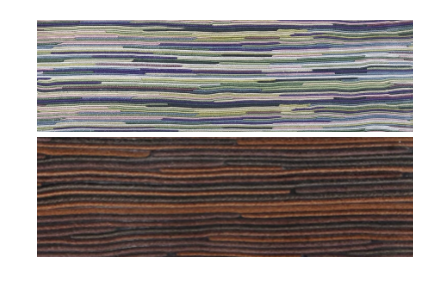
The defining characteristic of Hermès Vibrato Leather is its distinctive striped pattern, created through the meticulous arrangement of goat leather strips in complementary or contrasting colors. Unlike printed patterns or surface treatments, Vibrato’s stripes are integral to the leather’s construction, running through the entire thickness of the material. This three-dimensional quality gives the leather a unique depth and visual interest that changes subtly depending on the viewing angle and lighting conditions.
The texture of Vibrato is remarkably smooth yet substantial, combining the fine grain of goat leather with a slight variation in surface height where the strips meet. This creates a subtle tactile experience that distinguishes it from uniform leathers like Hermès Swift Leather. The goat leather base provides natural durability and resistance to scratching, while the multi-strip construction adds structural integrity that helps bags maintain their shape over time.
In terms of weight, Vibrato falls into the medium category, heavier than single-layer goat leathers but lighter than thick-grained options like Clemence or Togo. This balanced weight makes it particularly suitable for handbags, providing enough structure for the bag to stand upright while remaining comfortable to carry. The leather’s flexibility is another notable feature, with the strip construction allowing for natural movement without compromising the pattern’s alignment.
Color play is perhaps Vibrato’s most captivating characteristic. The strips typically feature two to four different shades, carefully selected to create either subtle tonal variations or bold contrasts. Popular combinations included earth tones like chocolate brown with caramel, jewel tones like sapphire with emerald, and neutral palettes featuring various shades of gray. The way these colors interact creates an almost iridescent effect, with the leather appearing to shift in hue as it moves.
The grain pattern within each strip maintains the characteristic fine texture of goat leather, providing a beautiful contrast to the geometric regularity of the stripe pattern. This combination of organic grain and geometric design creates a sophisticated aesthetic that works equally well in casual and formal settings. Unlike some heavily treated leathers, Vibrato retains the natural characteristics of the goat hide, including its inherent water resistance and ability to develop a beautiful patina over time.
Durability-wise, Vibrato demonstrates exceptional longevity when properly maintained. The goat leather base is naturally resistant to wear, and the multi-strip construction distributes stress across multiple pieces rather than concentrating it in one area. This makes Vibrato bags particularly resistant to corner wear and handle stress, common issues in heavily used luxury handbags. However, the complexity of the construction means that repairs, when needed, require specialized expertise not available at standard leather repair shops.
Manufacturing Excellence and Craftsmanship
The creation of Hermès Vibrato Leather represents one of the most complex manufacturing processes in the luxury leather goods industry. Beginning with the selection of raw materials, Hermès artisans would carefully choose goat hides from their trusted suppliers, ensuring consistency in grain pattern and thickness. Unlike the production of standard leathers like Hermès Chèvre Mysore Leather, Vibrato required multiple hides to be processed simultaneously to achieve color matching across the strips.
The tanning process for Vibrato leather followed Hermès’ exacting standards but with additional steps to ensure color fastness and consistency across different batches. Each hide designated for Vibrato production underwent specialized dyeing processes to achieve the precise shades required for the final pattern. The dyes were carefully formulated to ensure that adjacent strips would age harmoniously, preventing color disparities from developing over time.
Once the individual hides were prepared, master craftsmen would begin the intricate process of cutting the leather into precise strips. This required exceptional skill, as each strip needed to be perfectly uniform in width and cut along the grain to ensure consistent stretch and behavior. The strips were then arranged according to predetermined patterns, with careful attention paid to grain direction and color flow. This arrangement phase could take several hours for a single bag panel, as artisans would adjust and readjust the strips to achieve the optimal visual effect.
The assembly process involved a proprietary bonding technique that joined the strips without visible seams or adhesive marks. This invisible joining method was crucial to maintaining the leather’s flexibility and ensuring that the strips would age together as a unified piece. The bonded leather sheets were then pressed and treated to create a smooth, uniform surface while preserving the subtle textural variations that give Vibrato its character.
Quality control for Vibrato was particularly stringent, with multiple inspection points throughout the production process. Each completed leather panel was examined for pattern consistency, color harmony, bond integrity, and surface quality. Even minor imperfections would result in the entire panel being rejected, contributing to the limited availability of Vibrato products. This uncompromising approach to quality is characteristic of Hermès’ philosophy, as seen across their entire range of materials in the Additional Calf and Cow Leathers collection.
Hermès Bag Models Featuring Vibrato Leather
The Birkin bag in Hermès Vibrato Leather represents the pinnacle of the collection, with these pieces being among the most coveted in the secondary market. The structured nature of the Birkin perfectly showcased Vibrato’s striped pattern, with the clean lines of the bag emphasizing the geometric beauty of the leather. Sizes ranging from 25cm to 40cm were produced, though the 30cm and 35cm versions were most common. The way Vibrato’s stripes flowed across the Birkin’s panels created a dynamic visual effect, making each bag appear unique despite following consistent pattern guidelines.
Kelly bags in Vibrato demonstrated how the leather could adapt to different silhouettes while maintaining its distinctive character. The trapezoidal shape of the Kelly provided an interesting canvas for the striped pattern, with the flap creating a natural break that designers used to dramatic effect. Both Retourne and Sellier constructions were produced, though the Sellier’s crisp edges particularly complemented Vibrato’s geometric nature. The contrast between Vibrato Kelly bags and those in traditional leathers like Hermès Box Calf Leather highlighted the innovative nature of this material.
The Constance bag in Vibrato leather showcased how the pattern could work on smaller surfaces, with the H closure providing a striking focal point against the striped background. These pieces were particularly popular among collectors who appreciated the interplay between the geometric hardware and the linear pattern of the leather. The shoulder strap, also crafted in Vibrato, created a continuous flow of pattern that enhanced the bag’s overall aesthetic cohesion.
Garden Party totes in Vibrato demonstrated the leather’s versatility in more casual styles. The relaxed structure of the Garden Party allowed the Vibrato leather to drape naturally, creating interesting variations in how the stripes appeared when the bag was carried. These pieces proved that Vibrato could transcend formal occasions, offering a sophisticated option for everyday luxury.
Small leather goods in Vibrato, including wallets, card holders, and agenda covers, became highly collectible items that allowed Hermès enthusiasts to own a piece of this exceptional leather at a more accessible price point. The compact size of these items meant that the pattern could be precisely controlled, resulting in perfectly symmetrical designs that showcased the technical mastery involved in Vibrato production. These pieces often featured interesting pattern matching at corners and closures, demonstrating the attention to detail that went into even the smallest Vibrato items.
Limited edition and special order pieces in Vibrato represent the ultimate expression of this leather’s potential. Some collectors commissioned bags with custom color combinations or specific pattern arrangements, working directly with Hermès to create one-of-a-kind pieces. These special orders, when they appear on the secondary market, command premium prices that can exceed those of exotic leathers, reflecting the rarity and desirability of custom Vibrato pieces.
Color Palette and Combinations
The color story of Hermès Vibrato Leather is one of sophisticated harmony and bold creativity. Unlike monochromatic leathers, Vibrato’s multi-tonal nature allowed Hermès to explore color relationships in ways that were previously impossible in leather goods. The most successful Vibrato combinations were those that balanced contrast with cohesion, creating visual interest without overwhelming the eye.
Classic neutral combinations remained the most popular and versatile options in the Vibrato range. These included variations of brown, from deep chocolate to warm caramel, often combined with cream or tan strips. Such combinations offered the sophistication expected from Hermès while adding visual depth that distinguished them from solid-colored bags. Black and gray combinations provided a modern, urban aesthetic that appealed to contemporary collectors, with some pieces featuring up to four different shades of gray for a subtle ombré effect.
Jewel-toned Vibrato pieces represented the more adventurous side of the collection. Combinations of deep blue with purple, emerald green with teal, or burgundy with rose created striking effects that made these bags true statement pieces. These colorful versions were often produced in limited quantities, making them particularly sought after by collectors who appreciate rare and unusual Hermès pieces. The way light played across these colored strips created an almost prismatic effect, with the colors appearing to shift and change depending on the viewing angle.
Seasonal color releases in Vibrato often reflected broader trends in Hermès’ color palette while adding the unique dimension of the striped pattern. Spring collections might feature pastel combinations like pink with lavender, while autumn releases could include rich combinations of rust, olive, and gold. These seasonal pieces are now particularly valuable as they represent specific moments in Hermès history and were often produced in very limited quantities.
Hardware selection for Vibrato pieces required careful consideration to complement the multi-tonal leather. Gold hardware remained the most popular choice, as its warm tone harmonized with most color combinations. Palladium hardware was often selected for cooler-toned Vibrato pieces, particularly those featuring blues, grays, or purples. Some rare pieces featured combination hardware, where different metal tones were used to echo the mixed nature of the leather itself, though these remain exceptionally rare.
Care and Maintenance of Vibrato Leather
Maintaining Hermès Vibrato Leather requires a specialized approach that acknowledges both its unique construction and its goat leather composition. The multi-strip nature of Vibrato means that care products must be applied evenly across all strips to prevent differential aging or color changes. Unlike uniform leathers such as Hermès Togo Leather, Vibrato requires careful attention to ensure that cleaning and conditioning don’t affect the adhesive bonds between strips.
Daily care for Vibrato involves gentle brushing with a soft-bristled brush to remove surface dust and maintain the leather’s natural luster. The brushing motion should follow the direction of the stripes to avoid catching the edges where strips meet. A slightly damp, lint-free cloth can be used for light cleaning, but excessive moisture should be avoided as it could potentially affect the bonding between strips. After any cleaning, the leather should be allowed to dry naturally at room temperature, away from direct heat or sunlight.
Conditioning Vibrato leather requires products specifically formulated for goat leather, applied sparingly and evenly across the entire surface. The conditioner should be tested on an inconspicuous area first, as different strips might absorb the product at different rates due to variations in the original hide preparation. A thin, even layer applied with a soft cloth and allowed to absorb fully will help maintain the leather’s suppleness without creating buildup at the strip junctions. This process should be performed no more than twice a year, as over-conditioning can alter the leather’s appearance and potentially weaken the bonds between strips.
Storage of Vibrato pieces is crucial for maintaining their condition and appearance. Bags should be stored upright and stuffed with acid-free tissue paper to maintain their shape and prevent creasing across the stripe pattern. The storage area should have consistent temperature and humidity levels, as fluctuations can cause the different strips to expand and contract at different rates, potentially leading to warping or separation. Dust bags should be used, but ensure they’re breathable to prevent moisture buildup.
Professional maintenance for Vibrato leather should only be entrusted to specialists familiar with this unique material, ideally Hermès’ own restoration services. Standard leather repair shops may not understand the complexity of Vibrato’s construction and could inadvertently damage the piece. When professional cleaning is needed, it’s essential to inform the specialist about the leather’s multi-strip construction and any specific care instructions from Hermès. Regular professional inspection can help identify potential issues before they become serious problems, particularly checking for any signs of strip separation or adhesive failure.
Protecting Vibrato from environmental damage requires extra vigilance compared to single-piece leathers. Water exposure should be minimized, and if the bag does get wet, it should be dabbed gently with an absorbent cloth and allowed to dry naturally. Direct sunlight can cause differential fading between strips, so Vibrato pieces should be stored and displayed away from windows. Similarly, extreme temperatures can affect the adhesive bonds, so Vibrato bags shouldn’t be left in hot cars or exposed to freezing conditions.
Comparisons with Other Hermès Leathers
When comparing Hermès Vibrato Leather to other options in the Hermès leather pantheon, its unique construction immediately sets it apart from any single-hide leather. Unlike Hermès Clemence Leather, which offers a uniform, pebbled texture, Vibrato provides visual complexity through its striped pattern while maintaining a relatively smooth surface. This makes Vibrato more visually dynamic but potentially less versatile for those seeking understated elegance.
The goat leather base of Vibrato shares some characteristics with Hermès Chèvre de Coromandel Leather, particularly in terms of durability and grain fineness. However, Vibrato’s multi-strip construction adds weight and structure that single-piece Chèvre leathers don’t possess. This additional structure can be advantageous for bags that need to maintain their shape, but it also means Vibrato bags are less flexible and don’t develop the same soft, relaxed character that some Chèvre leathers achieve with age.
In terms of maintenance requirements, Vibrato is more demanding than hardy leathers like Epsom or Togo but less delicate than options like Swift or Box Calf. The primary challenge with Vibrato isn’t the leather itself but the complex construction, which requires careful handling to maintain the integrity of the strip bonds. This places Vibrato in a unique category where durability and delicacy coexist, requiring owners to be mindful without being overly cautious.
From an aesthetic standpoint, Vibrato occupies a unique position between classic and contemporary. While traditional leathers like Hermès Barenia Leather appeal to purists who appreciate natural leather characteristics, Vibrato attracts collectors who value innovation and artistic expression in their luxury goods. The striped pattern makes Vibrato bags instant conversation pieces, offering a level of visual interest that solid-colored leathers can’t match.
Price-wise, Vibrato pieces on the secondary market often command premiums comparable to or exceeding exotic leathers, despite being constructed from goat leather. This reflects not just the rarity of Vibrato but also the recognition of its technical complexity and artistic merit. While a standard Togo Birkin might be more practical for daily use, a Vibrato Birkin represents a collector’s piece that combines usability with investment potential.
Another interesting comparison can be made with Hermès Grizzly Leather, another discontinued Hermès leather known for its unique texture. Both represent Hermès’ willingness to experiment with unconventional treatments, and both have achieved cult status among collectors. However, while Grizzly’s appeal lies in its unusual suede and smooth leather combination, Vibrato’s attraction stems from its geometric pattern and complex construction.
Investment Value and Market Dynamics
The investment potential of Hermès Vibrato Leather pieces has proven exceptional since the material’s discontinuation, with values appreciating consistently and sometimes dramatically. Unlike actively produced leathers where supply continues to meet demand, Vibrato exists in a fixed, diminishing quantity, with pieces occasionally lost to wear or damage. This scarcity dynamic, combined with growing collector awareness, has created a robust market where Vibrato pieces often achieve prices 200-300% above their original retail values.
Market analysis reveals that certain Vibrato combinations and models appreciate more rapidly than others. Neutral-toned Birkin and Kelly bags in excellent condition represent the strongest investment pieces, as they appeal to the broadest range of collectors. Unusual color combinations or rare sizes can command even higher premiums from specialized collectors, though these pieces may take longer to sell due to their specific appeal. Small leather goods in Vibrato have also shown strong appreciation, offering an entry point for collectors who want to invest in this exceptional leather.
The authentication of Vibrato pieces has become increasingly important as values have risen, with counterfeiters attempting to replicate the distinctive striped pattern. However, the complexity of genuine Vibrato construction makes it nearly impossible to create convincing fakes, providing some security for collectors. Reputable auction houses and authentication services have developed specific protocols for verifying Vibrato pieces, examining not just the pattern but also the construction techniques and materials used.
Future value projections for Vibrato remain strongly positive, with several factors supporting continued appreciation. The fixed supply continues to decrease as pieces are lost or damaged beyond repair, while demand grows as new collectors discover this unique leather. The historical significance of Vibrato as an example of Hermès innovation adds cultural value beyond its material worth. Additionally, as Hermès continues to streamline its leather offerings for efficiency, the likelihood of Vibrato being reintroduced remains virtually nil, ensuring its continued rarity.
For collectors considering Vibrato as an investment, condition is paramount. Even minor issues like strip separation or color fading can significantly impact value, making proper storage and maintenance essential. Documentation, including original receipts, certificates of authenticity, and provenance information, can add substantial value to Vibrato pieces. Some collectors have found success in acquiring Vibrato pieces requiring minor restoration, having them professionally refurbished by Hermès, and realizing significant returns on their investment.
Authentication Guidelines for Vibrato
Authenticating Hermès Vibrato Leather requires expertise in both general Hermès authentication principles and specific knowledge of Vibrato’s unique characteristics. The complexity of Vibrato’s construction actually aids in authentication, as the sophisticated techniques required to create genuine Vibrato are beyond the capabilities of most counterfeiters. Key authentication points include examining the strip alignment, bond quality, and pattern consistency across the piece.
The grain pattern within each strip should display the characteristic fine texture of goat leather, with natural variations that indicate genuine hide rather than embossed patterns. The edges where strips meet should be virtually invisible to the touch, with no raised seams or gaps. Under magnification, the transition between strips should show the sophisticated bonding technique used by Hermès, without visible adhesive or rough edges. The pattern should maintain perfect alignment even at stress points like corners and handle attachments.
Hardware and stamps on Vibrato pieces follow standard Hermès authentication guidelines but with some period-specific characteristics. Date stamps should correspond to the years when Vibrato was in production (primarily 1990s to early 2000s), and the craftsman stamps should be consistent with artisans known to have worked with this challenging material. The blind stamp should be crisp and properly positioned, taking into account the potential challenges of stamping through the multi-layer construction.
Color consistency across strips is another crucial authentication point. Genuine Vibrato displays harmonious color relationships with strips that age uniformly. Counterfeit attempts often show color mismatches or differential aging between strips, as replicating Hermès’ precise dyeing process proves nearly impossible. The colors should also correspond to known Vibrato combinations, as Hermès maintained strict control over color pairings.
Styling Guide for Vibrato Pieces
Styling Hermès Vibrato Leather accessories requires a thoughtful approach that acknowledges the pattern’s visual impact while maintaining overall outfit harmony. The striped nature of Vibrato makes it a natural statement piece, best paired with solid colors or subtle patterns that don’t compete for visual attention. For professional settings, neutral-toned Vibrato bags pair beautifully with monochromatic business attire, adding interest without appearing too casual.
Seasonal considerations for Vibrato depend largely on the piece’s color combination. Earth-toned Vibrato works exceptionally well in autumn and winter, complementing the rich textures of seasonal fabrics like cashmere and wool. Lighter, more colorful Vibrato pieces shine in spring and summer, providing a sophisticated alternative to typical warm-weather accessories. The leather’s durability means it can be used year-round, though care should be taken to protect it from extreme weather conditions.
For evening occasions, Vibrato offers an elegant alternative to traditional exotic leathers or embellished bags. The pattern creates visual interest without the ostentation of heavily decorated pieces, making it suitable for both cocktail events and formal dinners. The way Vibrato catches and reflects light adds a subtle dynamism that photographs beautifully, making these pieces particularly popular for special events.
The Future Legacy of Vibrato
As we look toward the future, Hermès Vibrato Leather stands as a testament to the house’s willingness to push boundaries while maintaining uncompromising quality standards. Its discontinuation has only enhanced its mystique, transforming it from an innovative option to a legendary chapter in Hermès history. The influence of Vibrato can be seen in contemporary Hermès special editions and limited releases, where complex construction techniques and unusual material combinations echo the experimental spirit that Vibrato embodied.
For collectors, Vibrato represents more than just a rare leather—it’s a piece of luxury history that demonstrates the apex of leather craftsmanship. As the years pass and Vibrato pieces become increasingly scarce, their cultural and monetary value will likely continue to appreciate. Museums and private collections already recognize Vibrato pieces as important examples of late 20th-century luxury craft, with some pieces being acquired for permanent collections.
The technical innovations developed for Vibrato production have influenced leather working techniques throughout the luxury industry, though none have successfully replicated Hermès’ specific process. This technical legacy ensures that Vibrato remains unique, a singular achievement that stands apart from both its contemporaries and modern alternatives. As sustainable luxury becomes increasingly important, Vibrato also serves as a reminder that true luxury lies not in mass production but in exceptional craftsmanship and limited availability.
Conclusion
Hermès Vibrato Leather remains one of the most fascinating chapters in the history of luxury leather goods, representing a perfect confluence of artistic vision, technical innovation, and uncompromising craftsmanship. From its complex manufacturing process to its distinctive aesthetic appeal, Vibrato embodies everything that makes Hermès exceptional: the willingness to pursue perfection regardless of difficulty, the courage to innovate within tradition, and the commitment to creating pieces that transcend mere functionality to become works of art.
For those fortunate enough to own Vibrato pieces, proper care and appreciation of these exceptional items ensures their preservation for future generations. For collectors seeking to acquire Vibrato, understanding its unique characteristics, market dynamics, and authentication requirements is essential for making informed decisions. As the availability of Vibrato continues to decrease, each piece becomes not just a luxury accessory but a tangible connection to a remarkable period in Hermès history.
Whether viewed as an investment opportunity, a collector’s prize, or simply a beautiful example of leather craftsmanship, Hermès Vibrato Leather deserves its place among the most coveted materials in luxury fashion history. Its story reminds us that true luxury isn’t just about materials or brand names, but about the human creativity, skill, and dedication that transform raw materials into objects of lasting beauty and value. For those interested in exploring other exceptional Hermès leathers, we invite you to discover our comprehensive guides to materials like Hermès Troika Leather and the full range of options in our expertly curated collection at Handmade Birkin Bags.