
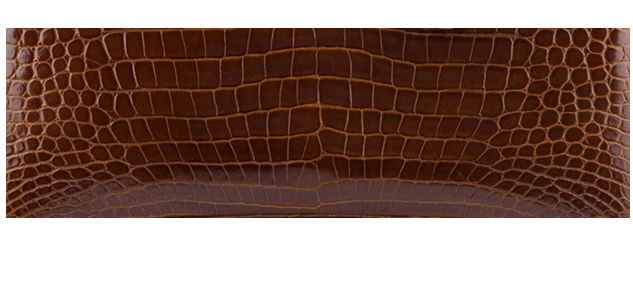
Introduction to Hermès Porosus Crocodile Leather
What sets Hermès Porosus Crocodile Leather apart in the luxury market is not just its beauty but also its extreme rarity and the meticulous process required to transform raw hide into the finished product. Each Porosus crocodile skin must meet Hermès’s exacting standards, with only a small percentage of available hides making the cut. This selectivity, combined with the specialized tanning processes and the expertise required to work with such precious material, results in handbags that are not merely accessories but true investment pieces that often appreciate in value over time.
The Rich History and Heritage of Porosus Crocodile at Hermès
The relationship between Hermès and exotic leathers dates back to the early 20th century, when the maison first began experimenting with materials beyond their traditional equestrian leathers. However, it was in the 1930s that Hermès truly began to establish itself as the master of exotic leather craftsmanship, with Porosus crocodile quickly emerging as one of the most coveted materials in their repertoire. The introduction of exotic leathers coincided with the house’s evolution from a saddlery to a luxury goods manufacturer, marking a pivotal moment in fashion history.
Robert Dumas, who married into the Hermès family and became instrumental in the company’s expansion, was particularly passionate about exotic leathers. Under his guidance, Hermès developed relationships with the finest tanneries specializing in crocodile leather, establishing quality standards that remain unmatched in the industry today. The maison’s commitment to excellence meant that only the finest Porosus hides would bear the Hermès name, a tradition that continues to this day with even more stringent selection criteria.
The 1950s and 1960s saw Hermès Porosus Crocodile Leather reach new heights of desirability, particularly as Hollywood stars and international royalty began carrying these exceptional pieces. Grace Kelly’s famous photograph shielding her pregnancy with a crocodile Hermès bag sparked a global phenomenon, though it was actually the Kelly bag’s availability in Porosus crocodile that truly cemented its status as the ultimate luxury accessory. This era established the template for how exotic leathers would be perceived in luxury fashion: rare, precious, and utterly uncompromising in quality.
Throughout the decades, Hermès has continuously refined its techniques for working with Porosus crocodile, developing proprietary methods for tanning, dyeing, and finishing that remain closely guarded secrets. The maison’s archives contain samples and records of every Porosus crocodile bag ever created, allowing them to track the evolution of their techniques and maintain consistency in quality across generations. This historical continuity is part of what makes each Hermès Porosus Crocodile Leather piece not just a purchase but an acquisition of living history.
In recent years, Hermès has also taken a leading role in sustainable crocodile farming, working closely with farms in Australia and Southeast Asia to ensure ethical sourcing and environmental responsibility. This commitment to sustainability has only enhanced the value and desirability of Hermès Porosus Crocodile Leather, as conscious luxury consumers appreciate the maison’s efforts to balance exclusivity with environmental stewardship.
Comprehensive Characteristics of Hermès Porosus Crocodile Leather
The defining characteristic of Hermès Porosus Crocodile Leather is its spectacular scale pattern, which features a perfect symmetry that seems almost mathematical in its precision. Unlike Hermès Niloticus Crocodile Leather, which displays smaller, more uniform scales, Porosus crocodile showcases dramatically large belly scales that gradually transition to smaller scales along the sides, creating a natural gradient that skilled craftsmen use to stunning effect. The central tiles, known as the belly scales, can measure several centimeters across, providing a bold, architectural quality that makes each bag a statement piece.
The texture of Hermès Porosus Crocodile Leather is another remarkable feature that sets it apart from other luxury materials. Each scale has a subtle three-dimensional quality, with gentle ridges and valleys that create a topographical landscape across the surface of the leather. This dimensional quality is enhanced through Hermès’s proprietary finishing processes, which can range from a high-gloss lisse finish that creates an almost mirror-like shine to a more subdued matte finish that emphasizes the natural texture of the scales. The leather feels substantial yet supple to the touch, with a flexibility that belies its apparent rigidity.
In terms of durability, Hermès Porosus Crocodile Leather possesses remarkable resilience when properly cared for, though it requires more attention than hardy leathers within the Classic Main Leathers collection. The scales are naturally water-resistant to a degree, thanks to the structure of crocodile skin, but the leather is sensitive to excessive moisture and extreme temperatures. What makes Porosus particularly special is its ability to develop a beautiful patina over time, with the scales taking on a deeper, richer appearance that adds character and individuality to each piece.
The aging process of Hermès Porosus Crocodile Leather is a fascinating aspect of its character. Unlike some leathers that may show wear as a negative, well-maintained Porosus crocodile develops what collectors call a “living finish”—a subtle evolution in color depth and scale definition that occurs through gentle use and proper care. This aging process is particularly beautiful in lighter colors, where the natural oils from handling create subtle variations in tone that add depth and complexity to the leather’s appearance.
Color absorption and retention in Hermès Porosus Crocodile Leather is exceptional, allowing for an incredible range of hues that would be impossible to achieve with other materials. The scales’ structure allows for deep, saturated colors that seem to glow from within, particularly in jewel tones like emerald, sapphire, and ruby. Hermès’s master colorists have developed techniques specific to Porosus crocodile that allow them to create effects ranging from subtle ombré gradients to bold, uniform colors that maintain their vibrancy for decades.
The structural integrity of Hermès Porosus Crocodile Leather makes it ideal for maintaining the shape of structured bags over time. The natural rigidity of the scales, combined with Hermès’s reinforcement techniques, means that bags crafted in this material retain their original silhouette exceptionally well, even with regular use. This shape retention is one reason why vintage Hermès Porosus crocodile bags remain so desirable in the secondary market, often looking nearly as pristine as the day they left the atelier.
Manufacturing Excellence: From Hide to Hermès
The journey of Hermès Porosus Crocodile Leather from raw hide to finished handbag is an odyssey of craftsmanship that can take several years to complete. The process begins with the careful selection of crocodiles from certified farms, primarily located in Australia’s Northern Territory and parts of Southeast Asia, where the Crocodylus porosus species thrives in its natural habitat. These farms operate under strict regulations and ethical guidelines, ensuring both the welfare of the animals and the sustainability of the species. Hermès maintains direct relationships with these suppliers, often visiting the farms to ensure standards are maintained.
Once harvested, the raw hides undergo an initial grading process where only the finest specimens—those without blemishes, scars, or irregularities—are selected for the Hermès tanning process. This selection is incredibly stringent, with industry experts estimating that less than 10% of available Porosus hides meet Hermès’s standards. The selected hides are then transported to specialized tanneries in France, where the transformation process truly begins.
The tanning process for Hermès Porosus Crocodile Leather is a closely guarded secret that has been refined over decades. Unlike the chrome tanning used for many modern leathers, Porosus crocodile undergoes a combination of vegetable and mineral tanning processes that can take several months to complete. This extended timeline allows for deep penetration of the tanning agents, ensuring that the leather remains supple and resistant to cracking while maintaining the natural beauty of the scales. The process requires constant monitoring and adjustment, with master tanners checking the hides daily to ensure optimal results.
Following tanning, the dyeing process for Hermès Porosus Crocodile Leather represents another level of artistry entirely. Unlike uniform leathers such as Hermès Epsom Leather, each crocodile hide presents unique challenges due to the varying density and structure of different scale areas. Hermès’s colorists must account for these variations, often applying different concentrations of dye to different areas to achieve a uniform final appearance. This process can involve multiple applications and treatments, with drying periods between each stage.
The finishing stage is where Hermès Porosus Crocodile Leather receives its distinctive character. Depending on the desired final appearance, the leather may undergo various treatments including glazing for a high-shine finish, buffing for a matte appearance, or specialized treatments that enhance the natural texture of the scales. Each finishing technique requires specific expertise, with craftsmen who specialize solely in exotic leather finishing. The attention to detail at this stage is extraordinary, with individual scales sometimes receiving hand treatment to ensure perfection.
Hermès Bag Models in Porosus Crocodile
The Birkin bag in Hermès Porosus Crocodile Leather represents the apex of luxury handbag creation, with each piece requiring approximately 48 hours of meticulous handcrafting by a single artisan. The Birkin’s structured design showcases the dramatic scale pattern of Porosus crocodile to perfection, with the large belly scales typically positioned at the center of the bag’s front panel to create maximum visual impact. Available in sizes ranging from the petite Birkin 25 to the travel-ready Birkin 40, each size presents the Porosus scales differently, with smaller bags offering a more delicate appearance while larger sizes showcase the full drama of the oversized scales.
The Kelly bag in Hermès Porosus Crocodile Leather carries a particular significance in Hermès history, as it was one of the first styles to be regularly produced in exotic materials. The Kelly’s more formal silhouette and single handle design create a sophisticated canvas for the Porosus scales, with the trapezoidal shape allowing for beautiful scale placement that emphasizes the leather’s natural symmetry. The Kelly Sellier construction, with its external stitching and sharp edges, is particularly stunning in Porosus crocodile, as the rigid structure complements the architectural quality of the scales.
Beyond the iconic Birkin and Kelly, Hermès creates numerous other styles in Porosus Crocodile Leather, each designed to highlight different aspects of this exceptional material. The Constance bag, with its sleek, minimalist design and prominent H closure, offers a modern interpretation of exotic luxury, while the scales create a textural contrast with the smooth metal hardware. The mini Constance in Porosus crocodile has become particularly sought-after, as the small size creates an almost jewel-like quality that makes it perfect for evening wear.
The Bolide bag, one of Hermès’s oldest designs and the first to feature a zipper, takes on new life when crafted in Hermès Porosus Crocodile Leather. The bag’s rounded shape creates interesting scale patterns as they curve around the form, while the zipper detail adds a sporty element that contrasts beautifully with the luxury of the exotic leather. This combination of casual design and precious material creates an intriguing juxtaposition that appeals to collectors who appreciate understated luxury.
Small leather goods in Hermès Porosus Crocodile Leather offer an entry point into the world of exotic Hermès pieces, though “entry-level” is relative when discussing such precious materials. Wallets, card holders, and agenda covers showcase the beauty of Porosus scales in a more accessible format, often featuring clever cutting patterns that maximize the visual impact of the scales despite the smaller surface area. These pieces are particularly popular as gifts and often become gateway items that lead to larger Porosus crocodile purchases.
Limited edition and special order pieces in Hermès Porosus Crocodile Leather represent the ultimate expression of the maison’s capabilities. Through the special order program, clients can commission unique combinations of Porosus crocodile with other materials, creating pieces that might combine Porosus with Hermès Ostrich Leather or feature custom hardware configurations. These one-of-a-kind creations often become the centerpieces of serious collections and can command extraordinary prices in the secondary market.
The Spectacular Color Palette
The color possibilities for Hermès Porosus Crocodile Leather are virtually limitless, with the maison’s color library containing hundreds of shades developed specifically for exotic leathers. Classic colors like Noir (black) and Chocolat (dark brown) showcase the natural beauty of the scales while providing versatility for everyday wear. In these darker shades, the Porosus scales create subtle tonal variations that add depth and richness, with the high points of each scale catching light to create a subtle shimmer effect that is both sophisticated and understated.
Neutral tones in Hermès Porosus Crocodile Leather have their own special appeal, with colors like Étoupe, Gris Tourterelle, and Craie offering a refined elegance that allows the texture of the scales to take center stage. These colors are particularly prized for their versatility and their ability to complement a wide range of wardrobes. The way light plays across neutral-toned Porosus scales creates an almost architectural quality, emphasizing the three-dimensional nature of the leather.
Bright and bold colors in Hermès Porosus Crocodile Leather are where the material truly showcases its unique properties. Vibrant hues like Rose Shocking, Bleu Électrique, and Vert Émeraude take on an almost electric quality when applied to Porosus scales, with the natural shine of the leather amplifying the color’s intensity. These statement colors are often produced in limited quantities and can become highly collectible, particularly in popular bag styles.
Seasonal and limited edition colors in Hermès Porosus Crocodile Leather are among the most sought-after pieces in the luxury handbag market. Each season, Hermès introduces new colors that may only be available for a short period, creating a sense of urgency among collectors. These special colors often push the boundaries of what’s possible with exotic leather dyeing, featuring complex undertones or unique finishes that set them apart from the permanent collection. Recent examples include gradient effects and two-tone treatments that showcase the technical mastery of Hermès’s craftsmen.
Care and Maintenance of Your Investment
Caring for Hermès Porosus Crocodile Leather requires dedication and attention to detail, but the effort is rewarded with a piece that maintains its beauty for generations. Daily care begins with proper handling—always ensure your hands are clean and dry before touching the bag, as oils and moisture can affect the leather’s finish over time. Unlike more resilient options in the Exotic Leather category, Porosus crocodile is particularly sensitive to environmental factors and requires a controlled environment for optimal preservation.
Storage is perhaps the most critical aspect of maintaining Hermès Porosus Crocodile Leather. The bag should always be stored in its original dust bag and box, stuffed with acid-free tissue paper to maintain its shape. The storage area should be climate-controlled, avoiding extremes of temperature and humidity that can cause the scales to crack or lift. Never store Porosus crocodile in plastic, as this can trap moisture and lead to mold or mildew development. The ideal storage temperature is between 60-70°F (15-21°C) with humidity levels between 45-55%.
Cleaning Hermès Porosus Crocodile Leather should be approached with extreme caution. For regular maintenance, a soft, dry cloth can be used to gently remove dust from the surface, always wiping in the direction of the scales. If deeper cleaning is needed, a barely damp cloth can be used, but the leather must be immediately dried with a soft, absorbent cloth. Never use commercial leather cleaners or conditioners unless they are specifically formulated for exotic leathers, as products designed for smooth leathers like Hermès Swift Leather can damage the delicate finish of crocodile skin.
Protection from the elements is essential for maintaining the pristine condition of Hermès Porosus Crocodile Leather. The leather should never be exposed to rain or excessive moisture, as water can cause spotting and potentially lift the edges of scales. If the bag does get wet, it should be gently patted dry with a soft cloth and allowed to air dry naturally, away from heat sources. Similarly, prolonged exposure to direct sunlight should be avoided, as UV rays can cause fading and drying of the leather.
Professional maintenance is strongly recommended for Hermès Porosus Crocodile Leather, with annual spa treatments at Hermès boutiques helping to maintain the leather’s suppleness and appearance. These professional services include specialized cleaning, conditioning with products specifically formulated for Porosus crocodile, and minor repairs if needed. The Hermès spa service has access to original dyes and finishes, allowing them to address issues that would be impossible to fix at home. Many collectors consider these professional services an essential part of ownership, viewing them as insurance for their investment.
Comparisons with Other Luxury Leathers
When comparing Hermès Porosus Crocodile Leather to other exotic options in the Hermès collection, the differences become immediately apparent. While Hermès Alligator Leather offers a similar prestigious appeal, Porosus crocodile is distinguished by its larger, more dramatic scales and typically higher price point. Alligator leather tends to have a more uniform scale pattern with a distinctive umbilical scar, while Porosus crocodile’s scales vary more dramatically in size from the belly to the edges, creating a more dynamic visual effect.
The comparison between Hermès Porosus Crocodile Leather and Hermès Lizard Leather highlights the different appeals of scaled exotic leathers. Lizard offers a much smaller, more delicate scale pattern that creates an almost pixelated effect, perfect for those who prefer subtlety in their exotic leather choices. Porosus crocodile, by contrast, makes a bold statement with its large scales and dramatic presence. The durability also differs, with Porosus generally being more robust than the delicate lizard skin.
Against classic Hermès leathers, the contrast is even more pronounced. While Hermès Togo Leather offers everyday durability and a relaxed elegance, Porosus crocodile is unabashedly luxurious and requires careful consideration for each wearing. Togo’s grainy texture and flexibility make it ideal for daily use, whereas Porosus crocodile is often reserved for special occasions or careful everyday wear by those who are particularly attentive to their bags’ care.
The smooth leathers in Hermès’s collection, such as Hermès Box Calf Leather, offer an interesting comparison point to Porosus crocodile. Both can achieve a high-shine finish and are considered formal leather choices, but Box Calf’s smooth surface creates a minimalist elegance while Porosus crocodile’s scales add texture and visual interest. Box Calf is also more prone to scratching but easier to refurbish, while Porosus crocodile is more resistant to surface marks but requires specialized care if damaged.
In terms of investment value and collectibility, Hermès Porosus Crocodile Leather stands in a category of its own. While all Hermès bags tend to retain or increase in value, Porosus crocodile pieces consistently achieve the highest prices at auction and in the secondary market. This is due not only to the material’s inherent cost and rarity but also to its limited production numbers and the exceptional craftsmanship required to work with it. A Birkin in Porosus crocodile can command prices several times higher than the same model in classic leather.
Investment Value and Market Dynamics
The investment potential of Hermès Porosus Crocodile Leather pieces has been proven repeatedly in auction houses worldwide, with records being broken regularly for exceptional examples. The combination of extreme rarity, timeless appeal, and Hermès’s controlled production ensures that demand consistently exceeds supply, creating ideal conditions for value appreciation. Unlike many luxury goods that depreciate upon purchase, Hermès Porosus Crocodile Leather bags often appreciate immediately, with retail prices serving as a floor rather than a ceiling for their value.
Market analysis shows that certain colors and combinations in Hermès Porosus Crocodile Leather perform particularly well as investments. Neutral colors maintain steady appreciation due to their versatility, while rare and discontinued colors can see explosive growth in value. Limited edition pieces or those with unusual hardware combinations command premium prices, particularly when they represent unique moments in Hermès history or were created for special occasions.
The secondary market for Hermès Porosus Crocodile Leather has become increasingly sophisticated, with specialized dealers and auction houses developing expertise in authenticating and valuing these pieces. Provenance plays a crucial role in determining value, with bags that come with complete documentation, including original receipts, certificates of authenticity, and maintenance records, commanding higher prices. The condition is paramount, with even minor flaws significantly affecting value, which underscores the importance of proper care and maintenance.
Geographic variations in demand also influence the investment value of Hermès Porosus Crocodile Leather. Asian markets, particularly China, Japan, and South Korea, have shown exceptional appetite for exotic Hermès pieces, often driving global prices. However, regulatory restrictions on the import and export of crocodile products through CITES (Convention on International Trade in Endangered Species) can complicate international transactions, making pieces with proper documentation even more valuable.
Authentication: Ensuring Authenticity
Authenticating Hermès Porosus Crocodile Leather requires expertise and attention to detail, as the high value of these pieces has unfortunately attracted sophisticated counterfeiters. Genuine Hermès Porosus crocodile will display several key characteristics that are difficult to replicate. The scale pattern should be naturally irregular—while symmetrical in overall layout, individual scales will show subtle variations in size and shape that occur in nature. Counterfeit pieces often show too-perfect uniformity or patterns that repeat unnaturally.
The Hermès stamp on Porosus Crocodile Leather pieces includes specific markings that indicate exotic leather, typically a caret (^) or other symbol next to the Hermès Paris stamp. The blind stamp, which indicates the year of production and craftsman’s ID, should be crisp and properly positioned. The hardware on authentic pieces will be weighty and precisely finished, with smooth operation of all closures and locks. The iconic Hermès lock and keys should have matching numbers, and the hardware’s plating should be flawless without any signs of wear or imperfection on new pieces.
The quality of craftsmanship in authentic Hermès Porosus Crocodile Leather is unmistakable upon close inspection. Stitching should be perfectly even and straight, with the saddle stitching technique creating a slight angle to each stitch. The edges of the leather should be perfectly finished with no lifting scales or rough areas. The lining should be precisely fitted with no puckering or loose areas, and any embossed logos or stamps within the bag should be crisp and correctly positioned.
Styling Your Porosus Crocodile Piece
Styling Hermès Porosus Crocodile Leather requires a thoughtful approach that respects the material’s inherent luxury while integrating it into modern wardrobes. For daytime wear, Porosus crocodile bags pair beautifully with refined casual attire—think cashmere sweaters, tailored trousers, and quality outerwear. The key is to let the bag be a focal point without overwhelming the outfit, creating a balance between luxury and approachability.
Evening occasions are where Hermès Porosus Crocodile Leather truly shines, with the scales’ natural luster complementing formal attire perfectly. A black Porosus crocodile clutch or mini Kelly can elevate any evening ensemble, while brighter colors can serve as stunning accent pieces against neutral evening wear. The formal nature of crocodile leather makes it particularly appropriate for galas, opera openings, and other high-society events where its presence will be appreciated and understood.
Conclusion: The Ultimate Luxury Legacy
Hermès Porosus Crocodile Leather represents more than just a material choice—it embodies a philosophy of uncompromising quality, timeless elegance, and the preservation of traditional craftsmanship in an increasingly mechanized world. Each piece crafted in this extraordinary leather carries with it the legacy of generations of artisans who have perfected their craft, the careful stewardship of natural resources, and the promise of enduring beauty that will be treasured for generations to come.
For those fortunate enough to acquire a piece in Hermès Porosus Crocodile Leather, the responsibility extends beyond mere ownership to becoming a custodian of a piece of luxury history. The investment required—both financial and in terms of care—is substantial, but the rewards are commensurate. These pieces don’t merely retain their value; they become family heirlooms, passed down through generations as tangible links to an era when craftsmanship and quality were paramount.
As we look to the future, Hermès Porosus Crocodile Leather will undoubtedly continue to represent the pinnacle of luxury leather goods. With increasing focus on sustainability and ethical sourcing combined with Hermès’s unwavering commitment to quality, these pieces will become even rarer and more precious. For collectors, enthusiasts, and those who simply appreciate the finest things in life, Hermès Porosus Crocodile Leather remains the ultimate expression of luxury, craftsmanship, and timeless style—a true treasure in the world of Hermès Crocodile Leather that stands alone at the apex of desirability.