
Introduction to Hermès Mississippiensis Alligator Leather
History and Heritage of Mississippiensis Alligator in Luxury
The introduction of Hermès Mississippiensis Alligator Leather into the maison’s collection represents a fascinating chapter in the evolution of luxury leather goods. While Hermès had long worked with exotic skins from around the world, the incorporation of American alligator leather in the mid-20th century marked a significant expansion of their exotic leather program. This decision was driven not only by the exceptional quality of the material but also by the growing American market’s desire for luxury goods that reflected both European craftsmanship and American natural resources.
The Mississippi River basin, from which this species takes its name, has been home to these magnificent creatures for millions of years. However, it wasn’t until strict conservation measures were implemented in the 1960s and 1970s that sustainable harvesting became possible. Hermès was among the first luxury houses to recognize the potential of working with certified farms that adhered to the highest standards of both animal welfare and environmental sustainability. This commitment to responsible sourcing has become integral to the story of Hermès Mississippiensis Alligator Leather.
Throughout the decades, this leather has been featured in some of Hermès’s most iconic creations, from limited edition Birkin bags to bespoke Kelly bags commissioned by royalty and celebrities. The 1980s saw a particular surge in popularity for Mississippiensis alligator pieces, coinciding with the era’s embrace of bold luxury statements. Notable collectors began specifically requesting this leather for custom orders, appreciating its distinctive American character within the context of French haute maroquinerie.
The evolution of tanning techniques specific to Mississippiensis alligator skin has been a closely guarded secret within Hermès’s ateliers. Master tanners developed proprietary methods to enhance the natural beauty of the scales while ensuring the leather remained supple enough for the demanding construction techniques required for Hermès bags. These innovations have allowed the material to maintain its structural integrity while developing a beautiful patina over time, distinguishing it from other options in the Alligator Varieties category.
Today, Hermès Mississippiensis Alligator Leather continues to represent the pinnacle of exotic leather luxury, with each piece requiring approval from master craftsmen who have spent decades perfecting their understanding of this challenging material. The heritage of this leather is not just about its origins but about the continuous refinement of techniques that honor both the material’s natural beauty and the maison’s uncompromising standards.
Comprehensive Characteristics of Mississippiensis Alligator
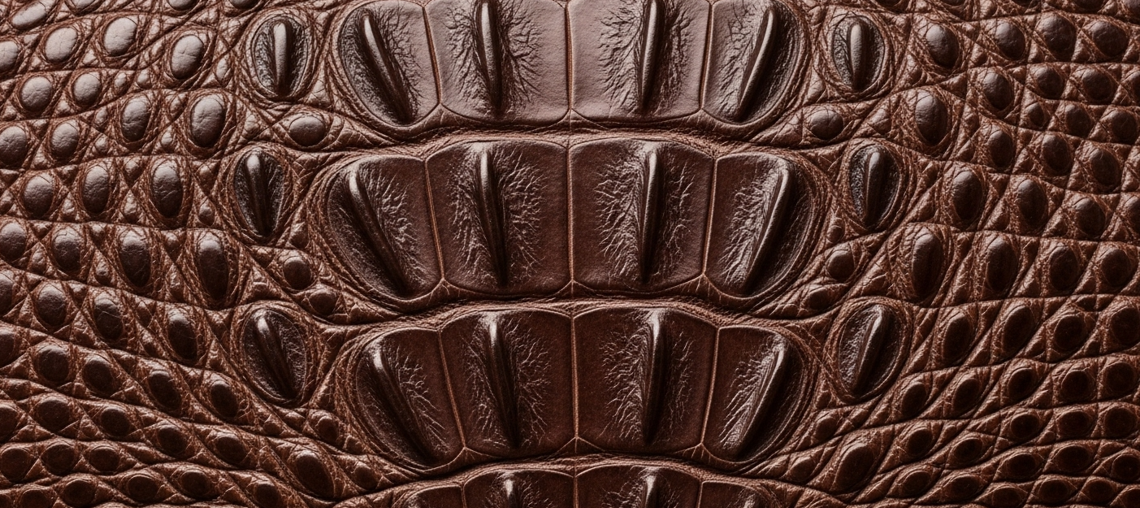
The visual impact of Hermès Mississippiensis Alligator Leather is immediately striking, characterized by its distinctive scale pattern that creates a natural geometric artwork on every surface. The belly scales, which are the most prized portion of the hide, display a rectangular pattern that gradually transitions to smaller, rounder scales toward the edges. This natural gradation creates visual interest and allows skilled artisans to strategically place pattern elements when constructing bags, ensuring that each piece showcases the leather’s most attractive features.
The texture of Mississippiensis alligator is remarkably complex, offering both smooth and slightly raised surfaces that create a tactile experience unlike any other leather in the Hermès collection. When compared to Hermès Niloticus Crocodile Leather, the Mississippiensis alligator presents larger, more pronounced scales with a slightly matte finish that many collectors find more understated and sophisticated. This subtle difference in texture also affects how the leather interacts with light, creating a play of shadows and highlights that changes throughout the day.
Durability is perhaps one of the most surprising characteristics of Hermès Mississippiensis Alligator Leather. Despite its exotic nature and the common perception that exotic leathers are delicate, properly treated Mississippiensis alligator is remarkably resilient. The natural armor-like quality of alligator skin, evolved over millions of years for protection in harsh environments, translates into exceptional wear resistance when properly tanned and finished by Hermès craftsmen. This durability extends to both the structural integrity of the scales and the leather’s resistance to environmental factors.
The aging process of Mississippiensis alligator leather is particularly fascinating, as it develops a unique patina that enhances rather than diminishes its beauty. Unlike some leathers that may lose their luster over time, well-maintained Mississippiensis alligator develops a deeper, richer tone that adds character and individuality to each piece. The scales may soften slightly with use, conforming subtly to the owner’s habits while maintaining their distinctive pattern and structure.
Weather resistance is another notable characteristic, though it requires understanding and respect for the material’s properties. While Mississippiensis alligator leather can handle occasional exposure to moisture better than many other exotic leathers, it should never be subjected to prolonged water exposure. The natural oils in the leather provide some protection, but Hermès’s finishing processes add additional safeguards without compromising the leather’s breathability or natural beauty. This balance between protection and preservation of natural characteristics is what sets Hermès’s treatment apart from other luxury houses.
The weight and flexibility of Hermès Mississippiensis Alligator Leather also deserve mention. Despite the robust nature of alligator skin, the finished leather is surprisingly lightweight, making it ideal for larger bag formats that might become cumbersome in heavier materials. The flexibility, carefully calibrated through the tanning process, allows the leather to maintain its shape while providing just enough give for comfortable daily use.
Manufacturing Excellence and Craftsmanship
The journey of transforming raw Mississippiensis alligator skin into Hermès Mississippiensis Alligator Leather begins long before it reaches the famous ateliers in France. Hermès maintains relationships with select farms in Louisiana, Florida, and other southeastern states where American alligators are raised under strictly controlled conditions. These partnerships ensure not only the highest quality raw materials but also adherence to conservation standards that protect wild populations and support sustainable practices in the industry.
The selection process for skins suitable for Hermès products is extraordinarily rigorous. Expert inspectors examine each hide for uniformity of scale pattern, absence of scars or blemishes, and overall size compatibility with intended products. Only a small percentage of available skins meet Hermès’s exacting standards, with factors such as the age of the animal, seasonal variations, and even the specific habitat conditions all playing roles in determining quality. This selective approach ensures that every piece bearing the Hermès name represents the pinnacle of material excellence.
The tanning process for Mississippiensis alligator is a closely guarded secret that has been refined over decades. Unlike the processes used for Hermès Alligator Leather from other species, Mississippiensis requires specific adjustments to account for its unique scale structure and skin composition. The process can take several months, involving multiple stages of treatment that preserve the natural beauty while enhancing durability and suppleness. Each stage requires precise timing and environmental conditions, with master tanners making adjustments based on the individual characteristics of each hide.
Color application to Mississippiensis alligator leather represents another level of artistry entirely. The scales’ natural variation in texture and porosity means that dye absorption can vary across the surface, requiring expert knowledge to achieve uniform color while maintaining the natural character of the scales. Hermès has developed proprietary techniques that allow for an extensive color palette while preserving the leather’s inherent qualities. Some colors are particularly challenging to achieve on alligator skin, making certain combinations of Mississippiensis alligator and specific Hermès colors especially rare and valuable.
The cutting and assembly phase demands perhaps the highest level of skill in the entire production process. Each Mississippiensis alligator hide has unique characteristics that must be considered when planning the layout of bag components. Master craftsmen spend hours studying each hide, determining the optimal placement of patterns to showcase the most beautiful sections while ensuring structural integrity. This process is particularly crucial for iconic models like the Birkin and Kelly, where the symmetry and flow of the scale pattern can dramatically impact the bag’s visual appeal.
Hermès Bag Models in Mississippiensis Alligator
The Birkin bag in Hermès Mississippiensis Alligator Leather represents the ultimate expression of luxury and craftsmanship. Available in sizes ranging from the diminutive Birkin 25 to the travel-ready Birkin 40, each size presents unique opportunities to showcase the leather’s distinctive scale patterns. The Birkin 30 and 35 are particularly coveted in Mississippiensis alligator, as these sizes provide the perfect canvas for displaying the transition from larger belly scales to the smaller side scales. The structured nature of the Birkin silhouette complements the natural armor-like quality of alligator skin, creating a harmonious blend of form and material.
The Kelly bag takes on an entirely different character when crafted in Mississippiensis alligator leather. The bag’s more formal silhouette and single handle construction create a sophisticated showcase for the leather’s natural geometry. The Retourne construction, with its softer, more relaxed shape, allows the alligator skin to drape naturally, creating subtle variations in how light plays across the scales. In contrast, the Sellier construction, with its external stitching and more rigid structure, emphasizes the leather’s inherent strength and creates a more architectural presentation. Both styles have their devoted collectors, with some preferring the understated elegance of Retourne and others drawn to the bold statement of Sellier.
The Constance bag in Mississippiensis alligator offers a more contemporary interpretation of exotic luxury. The bag’s clean lines and prominent H closure create a modern frame for the traditional material, appealing to collectors who appreciate both heritage and innovation. The long strap of the Constance, when crafted in matching alligator, becomes a statement piece in itself, with the scale pattern creating visual interest that extends beyond the bag body. This model has become increasingly popular among younger collectors who appreciate its versatility and the way it bridges casual and formal occasions.
Lesser-known models gain extraordinary presence when executed in Hermès Mississippiensis Alligator Leather. The Bolide, with its distinctive dome shape and zipper closure, showcases the leather’s flexibility while maintaining structure. The Jypsiere, with its casual messenger bag styling, becomes elevated to haute couture status when crafted in exotic alligator. Even smaller leather goods like the Bearn wallet or Calvi card holder become significant pieces when rendered in this precious material, offering entry points for collectors beginning their journey with Hermès Crocodile Leather and other exotic options.
Special and limited editions in Mississippiensis alligator have become legendary among collectors. Hermès occasionally creates unique pieces that combine this leather with other materials, such as canvas bodies with alligator trim, or bags featuring both Mississippiensis alligator and Hermès Porosus Crocodile Leather in striking combinations. These pieces, often created for special exhibitions or anniversary celebrations, command premium prices in the secondary market and are considered the holy grail for serious collectors.
The Himalaya treatment applied to Mississippiensis alligator deserves special mention. This gradation technique, which creates an ombré effect from dark to light mimicking the Himalayan mountains, is particularly striking on alligator skin. The natural variation in scale size enhances the gradient effect, creating pieces that are truly one-of-a-kind. These bags represent the pinnacle of Hermès craftsmanship and are among the most valuable handbags in the world.
Color Palette and Hardware Combinations
The color possibilities for Hermès Mississippiensis Alligator Leather span an impressive spectrum, from classic neutrals to bold, saturated hues that showcase the maison’s mastery of exotic leather dyeing. Black (Noir) remains the most requested color, as it emphasizes the texture and pattern of the scales while offering maximum versatility. The deep, rich black achieved on Mississippiensis alligator has a depth that surpasses what can be achieved on regular leathers, with each scale catching light differently to create subtle variations in tone.
Earth tones and browns hold special significance in the Mississippiensis alligator palette, as they echo the leather’s natural coloring while adding sophistication through Hermès’s refined dyeing process. Chocolat, Havane, and Fauve are particularly stunning, allowing the natural variations in the scales to create organic depth and richness. These colors age beautifully, developing additional complexity over time that makes each piece increasingly unique. The way these browns interact with different lighting conditions—from warm candlelight to bright daylight—creates an ever-changing visual experience.
Jewel tones on Mississippiensis alligator leather achieve an intensity rarely seen in other materials. Rouge H, with its deep burgundy undertones, creates a luxurious depth that seems to glow from within. Vert Emerald transforms the alligator into something truly exotic, while Bleu Saphir creates an oceanic depth that plays beautifully with the scale pattern. These saturated colors require exceptional skill to execute properly on alligator skin, making bags in these shades particularly valuable to collectors who understand the technical achievement they represent.
Hardware selection plays a crucial role in maximizing the impact of Hermès Mississippiensis Alligator Leather. Palladium hardware provides a modern, cool-toned complement that works particularly well with grey and blue-toned alligator shades. Gold hardware, whether yellow or rose, adds warmth and traditional luxury, creating stunning combinations with brown, red, and green alligator. The rare brushed gold hardware option offers a more subdued elegance that allows the leather to take center stage while still providing a luxurious accent.
Seasonal and limited edition colors in Mississippiensis alligator have become highly sought after by collectors. Colors like Rose Scheherazade, Lime, or Menthe represent not just beautiful shades but also specific moments in Hermès history. These limited productions often coincide with special events or anniversaries, making them particularly valuable both financially and historically. The challenge of achieving these often unconventional colors on alligator skin means that production numbers are typically very low, adding to their desirability.
Care and Maintenance Excellence
Proper care of Hermès Mississippiensis Alligator Leather begins with understanding that this exotic material requires a different approach than Classic Main Leathers like Togo or Clemence. The first principle of alligator care is prevention—protecting the leather from potentially damaging situations is far easier than remedying problems after they occur. This means being mindful of exposure to water, direct sunlight, and extreme temperatures, all of which can affect the leather’s appearance and longevity.
Daily maintenance should be gentle and minimal. A soft, dry cloth—preferably made from natural fibers like cotton or chamois—should be used to gently remove any surface dust or fingerprints. The direction of cleaning matters with alligator leather; always wipe in the direction of the scales, never against them, to avoid lifting or damaging the scale edges. This simple daily practice helps maintain the leather’s luster and prevents the accumulation of dirt that could become more difficult to remove over time.
Conditioning Mississippiensis alligator leather requires specialized products designed specifically for exotic skins. Unlike the conditioning routine for standard leathers, alligator should be conditioned sparingly—perhaps once or twice a year depending on climate and use. Over-conditioning can actually damage the leather, causing scales to lift or the surface to become sticky. When conditioning is necessary, it should be applied with a light touch using products recommended by Hermès or exotic leather specialists. The conditioner should be allowed to absorb naturally without rubbing, and any excess should be gently buffed away with a clean, soft cloth.
Storage of Mississippiensis alligator pieces is crucial for maintaining their beauty and structure. These items should always be stored in their original Hermès dust bags and boxes, which are designed to provide the right balance of protection and breathability. The bag should be stuffed with acid-free tissue paper or the original Hermès rain pillows to maintain shape, but not so tightly that it puts stress on the leather. Humidity control is particularly important; too dry an environment can cause the leather to crack, while excessive humidity can lead to mold or scale lifting.
Professional cleaning and restoration should be considered an investment in the longevity of your Mississippiensis alligator piece. Hermès offers spa services specifically trained in exotic leather care, and these should be utilized for any significant cleaning or restoration needs. Attempting to address serious issues at home, such as water damage or significant soiling, risks permanent damage to this precious material. The cost of professional care is minimal compared to the value of the piece and the potential cost of irreversible damage.
Emergency care situations require calm and appropriate response. If your Mississippiensis alligator bag gets wet, the immediate response should be to gently blot—never rub—excess moisture with a soft, absorbent cloth. The bag should then be allowed to dry naturally at room temperature, away from direct heat or sunlight. Stuffing the bag with white tissue paper can help maintain shape and absorb internal moisture. Once completely dry, a light conditioning may be necessary to restore suppleness, but this should ideally be done by a professional.
Comparisons with Other Hermès Leathers
When comparing Hermès Mississippiensis Alligator Leather to other exotic options, the distinctions become particularly nuanced and important for collectors to understand. Compared to Hermès Niloticus Crocodile Leather, Mississippiensis alligator typically features larger, more uniform belly scales with a slightly different pattern geometry. While Niloticus crocodile scales tend to be smaller and more numerous, creating a finer pattern, Mississippiensis alligator’s larger scales create a bolder, more dramatic visual impact. This difference affects not just aesthetics but also the way the leather wears and ages, with Mississippiensis developing a different patina pattern due to its scale structure.
The comparison with Hermès Porosus Crocodile Leather reveals interesting contrasts in both appearance and market positioning. Porosus, sourced from saltwater crocodiles, features distinctive pore patterns on each scale that are absent in Mississippiensis alligator. These pores, while adding unique character to Porosus, also make it slightly more delicate and susceptible to water damage. Mississippiensis alligator, lacking these pores, offers marginally better durability while maintaining the exotic appeal. In terms of value, both command premium prices, though Porosus often edges slightly higher due to its rarity and the specific challenges of working with this material.
Against non-exotic options like Hermès Togo Leather, the differences are more fundamental. Togo’s fine grain and remarkable durability make it ideal for daily use, while Mississippiensis alligator is often reserved for special occasions or careful daily wear. However, the investment potential of Mississippiensis alligator far exceeds that of Togo, with exotic pieces typically appreciating at a much higher rate. The visual impact is also incomparable—while Togo offers understated elegance, Mississippiensis alligator makes an unmistakable luxury statement.
When compared to other exotic options like Hermès Ostrich Leather, Mississippiensis alligator presents a completely different aesthetic and tactile experience. Ostrich leather’s distinctive quill pattern creates a dotted texture that’s more uniform and predictable than alligator’s varied scale pattern. Ostrich is generally considered more durable for daily use and less sensitive to environmental conditions, but it lacks the dramatic visual impact and prestige associated with alligator. The choice between these exotics often comes down to personal preference and intended use patterns.
The practical considerations of choosing Mississippiensis alligator over other leathers extend beyond aesthetics. While it requires more careful maintenance than standard leathers, it offers better durability than some other exotics like lizard or certain snake skins. The investment required for Mississippiensis alligator is substantial, but the combination of rarity, beauty, and strong appreciation potential makes it attractive for collectors who view their Hermès pieces as both functional accessories and alternative investments. Understanding these comparisons helps collectors make informed decisions about which leather best suits their lifestyle, aesthetic preferences, and investment goals.
Investment Value and Market Dynamics
The investment potential of Hermès Mississippiensis Alligator Leather pieces has consistently outperformed traditional luxury goods and even many conventional investment vehicles. Historical data from auction houses like Christie’s and Sotheby’s demonstrates that Mississippiensis alligator Birkin and Kelly bags have appreciated at rates exceeding 14% annually over the past two decades, with certain rare color combinations and sizes achieving even more dramatic returns. This appreciation is driven by a combination of factors including limited production, increasing global wealth, and the growing recognition of luxury handbags as alternative investments.
Market dynamics for Mississippiensis alligator pieces are influenced by several key factors that collectors must understand. The primary market—purchasing directly from Hermès boutiques—remains extremely restricted, with these exotic pieces typically offered only to the most established clients with significant purchase histories. This scarcity in the primary market creates robust demand in the secondary market, where prices often reflect premiums of 50% to 200% above retail, depending on the specific combination of model, size, color, and hardware.
Rarity multipliers significantly impact the value of Hermès Mississippiensis Alligator Leather bags. Limited edition colors, discontinued models, or special combinations ordered through Hermès’s Special Order program command the highest premiums. Bags with exotic leather combinations, such as Mississippiensis alligator with touches of another exotic leather, are particularly valuable. The size of the bag also affects value trajectories, with certain sizes like the Birkin 25 and Kelly 28 showing stronger appreciation due to their versatility and current fashion preferences.
The condition grading system for exotic leathers is more stringent than for regular leathers, significantly impacting resale values. Pristine, unused Mississippiensis alligator pieces with full documentation can command prices approaching or exceeding current retail, while even minor condition issues can reduce value by 20-30%. This sensitivity to condition makes proper care and maintenance not just about preserving beauty but also about protecting investment value. Professional authentication and condition certificates from recognized experts have become essential for maximizing value in the resale market.
Global economic factors and cultural trends influence the market for Mississippiensis alligator pieces in complex ways. Economic uncertainty often drives demand for tangible luxury assets, with Hermès exotics viewed as portable stores of value. Cultural shifts, such as the growing acceptance of luxury handbags as legitimate investments and the influence of social media on luxury consumption patterns, continue to expand the collector base. The emergence of new wealth centers in Asia and the Middle East has created additional demand pressure, particularly for exotic pieces that represent the ultimate in luxury and exclusivity.
Authentication Markers and Security Features
Authenticating Hermès Mississippiensis Alligator Leather requires expertise in recognizing subtle details that distinguish genuine pieces from increasingly sophisticated counterfeits. The scale pattern itself serves as a primary authentication marker, as genuine Mississippiensis alligator displays natural irregularities and variations that are nearly impossible to replicate artificially. Each scale should show subtle differences in size, shape, and elevation, with the transition from belly to flank scales occurring gradually and organically. Counterfeit pieces often show unnaturally uniform patterns or abrupt transitions that betray their artificial origin.
The Hermès craftsman stamp on Mississippiensis alligator pieces includes specific markings that indicate exotic leather status. The presence of a caret (^) symbol next to the Hermès stamp indicates exotic skin, while additional symbols may specify the exact type of exotic. These stamps should be crisp and deeply impressed, with consistent depth and clarity. The blind stamp indicating year of production should align with known production patterns for exotic pieces, as Hermès produces limited quantities of alligator bags each year.
Hardware attachment points provide crucial authentication evidence on alligator pieces. The way hardware is secured through exotic leather differs from standard leather construction, with reinforced backing visible from the interior to prevent tearing of the more delicate exotic skin. Genuine Hermès pieces show meticulous attention to these stress points, with perfectly aligned reinforcements and no signs of glue or irregular stitching. The weight and feel of the hardware itself should correspond to the specific period of production, as Hermès has used different plating techniques over the decades.
The interior construction of authentic Mississippiensis alligator bags reveals Hermès’s exceptional attention to detail. The lining leather, typically chevre (goat skin), should be of the highest quality with perfect stitching and no loose threads. The way the lining meets the exotic leather exterior shows precise craftsmanship, with even spacing and tension throughout. Date stamps and craftsman marks inside the bag should correspond to documented Hermès production codes and align with the exterior indicators of authenticity.
Styling Guide for Mississippiensis Alligator
Styling Hermès Mississippiensis Alligator Leather requires a sophisticated understanding of how to balance the dramatic presence of exotic leather with overall ensemble harmony. For daytime elegance, a Mississippiensis alligator bag pairs beautifully with refined casual wear—think cashmere sweaters, tailored trousers, and subtle jewelry that doesn’t compete with the bag’s natural drama. The key is allowing the exotic leather to serve as the focal point while maintaining an overall look of effortless sophistication rather than ostentatious display.
Evening occasions provide the perfect backdrop for Mississippiensis alligator to truly shine. A black or deep jewel-toned alligator clutch or small Kelly becomes the perfect complement to cocktail attire or evening gowns. The way alligator leather catches and reflects light under evening lighting creates an almost liquid effect that adds movement and life to formal ensembles. The scales’ natural geometry can echo geometric jewelry or provide organic contrast to flowing fabrics, offering versatile styling options for different formal occasions.
Seasonal considerations play an important role in styling Mississippiensis alligator pieces. While these exotic leather bags can certainly be worn year-round, they particularly excel during fall and winter months when their luxurious presence complements rich textures like wool, cashmere, and fur. In warmer months, lighter colors in alligator can provide sophisticated contrast to linen and silk, though extra care must be taken to protect the leather from excessive heat and humidity during summer wear.
Conclusion: The Enduring Legacy of Mississippiensis Alligator
Hermès Mississippiensis Alligator Leather represents far more than just a luxury material—it embodies the intersection of natural beauty, masterful craftsmanship, and investment potential that defines the pinnacle of luxury leather goods. The journey from the wetlands of the American South to the ateliers of France, and ultimately to the collections of discerning connoisseurs worldwide, tells a story of transformation that elevates both material and maker. For those fortunate enough to acquire pieces in this extraordinary leather, the experience transcends mere ownership to become a participation in a legacy of excellence.
The enduring appeal of Mississippiensis alligator lies not just in its rarity or price point, but in its ability to capture and hold attention through its natural architecture and the skill required to transform it into functional art. As we look to the future, the combination of sustainable sourcing practices, evolving craftsmanship techniques, and growing global appreciation for exotic leathers ensures that Hermès Mississippiensis Alligator Leather will continue to represent the ultimate expression of luxury. Whether viewed as an investment, a collector’s piece, or simply an object of beauty, these creations stand as testaments to what becomes possible when nature’s finest materials meet humanity’s greatest craftsmanship.
For those considering adding a Mississippiensis alligator piece to their collection, the journey begins with understanding and appreciating the material’s unique qualities, care requirements, and investment potential. The reward for this consideration is ownership of something truly extraordinary—a piece that will not only maintain its beauty and value but will become more precious with each passing year. To explore more options in exotic leathers, discover the full range of Alligator Varieties available in the Hermès collection.